 30/05/2026
The illusion we built together
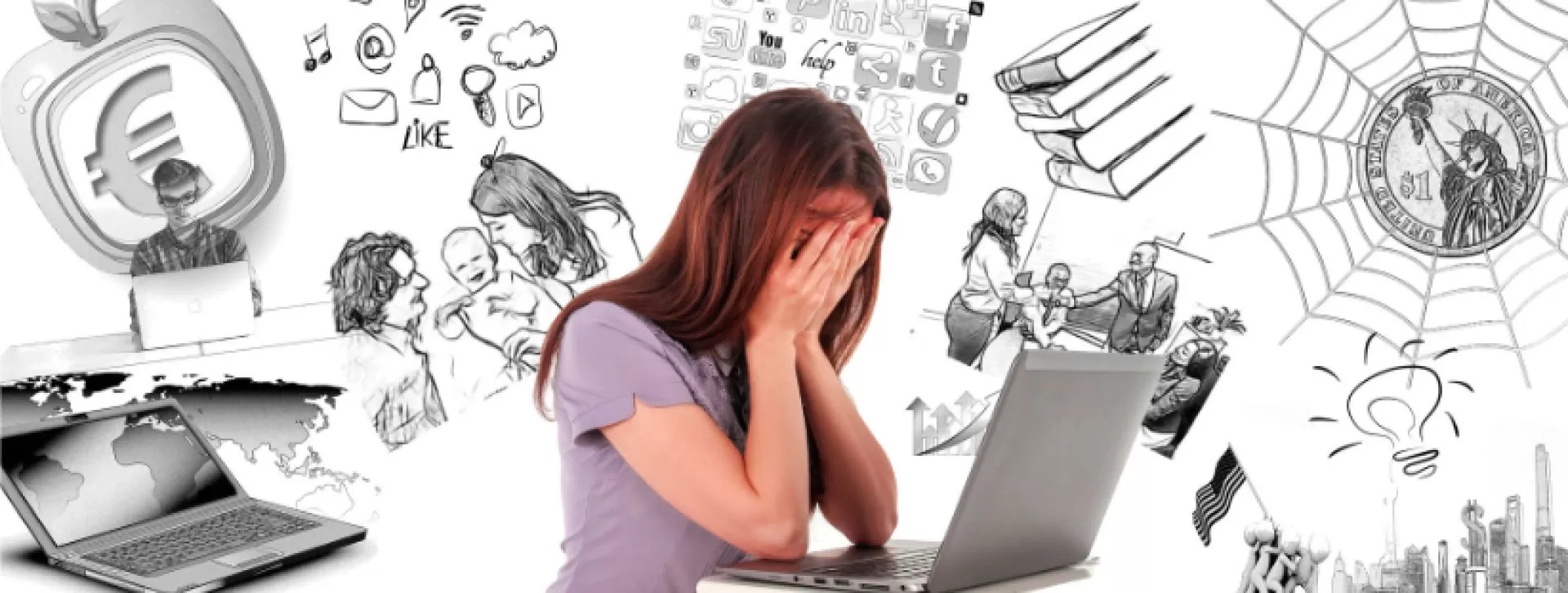
Picture a typical Monday morning. Emails piling up, a Zoom call running in the background, a report half-finished, and Slack pinging every 90 seconds. By noon, you've been "working" for four hours — yet somehow, the to-do list looks exactly the same.
This is multitasking culture in action. And it has become so normalized in modern workplaces that we rarely stop to ask: is this actually working for us?
The answer, backed by science, is a clear no. What feels like efficiency is actually the brain in constant damage-control mode — rapidly switching between tasks, losing context with every jump, and accumulating cognitive debt we don't even notice until burnout arrives.
"The brain doesn't multitask. It task-switches. And every switch has a cost."
What the research actually tells us
Stanford researchers led by Clifford Nass found that heavy multitaskers were significantly more vulnerable to distraction — they struggled to filter irrelevant information and performed worse on memory tasks. Their conclusion? Heavy multitaskers are essentially training their brains to be less focused.
A 2025 study on virtual meetings found that multitasking during video calls increased fatigue across multiple dimensions and reduced objective performance — without improving the person's subjective sense of how they did. In other words: you think you're keeping up. You're not.
And in a study of IT sector employees, job stress mediated 35.73% of the relationship between multitasking and overall wellbeing. The more fragmented the attention, the greater the toll on mental health.
It's not a personal problem. It's a system problem.
The WHO and ILO have officially classified excessive workload, fast work pace, unclear roles, and constant interruptions as psychosocial risks — factors that directly undermine employee mental health. This isn't about individuals who can't focus. It's about organizational cultures that have made fragmented attention the default.
When everything is urgent, nothing is. When every message demands an immediate response, deep work disappears. And when deep work disappears, so does innovation, quality, and genuine engagement.
- Multitasking Culture: Constant interruptions · Reactive decisions · Error-prone work · Mental exhaustion · Burnout · High turnover · "Always busy, rarely effective"
- Focus Culture: Protected deep work · Intentional priorities · Higher quality output · Psychological safety · Sustainable performance · Teams that actually thrive
What actually works: Two practices worth trying
- Time blocking assigns specific hours to specific types of work - When you block 9–11am for deep thinking and 3–4pm for emails, you stop making decisions all day about what to do next — and you protect the mental space required to do your best work.
- Task batching groups with similar tasks — All emails at once, all calls in a row, all creative work in one sitting. Instead of switching contexts 40 times a day. you. The cognitive savings are enormous.
These aren't productivity hacks. They're structural adjustments that honor how human attention actually works — and how organizations can protect it at scale.
"The goal isn't to do more at once. It's to do one thing well — and mean it."
At Its P Foundation, we believe sustainable performance starts with protecting the human mind.
Join our community, explore our resources, and take the first step toward a healthier, more intentional workplace.
Sources: American Psychological Association · Stanford University (Clifford Nass et al.) · University of California, Irvine · WHO/ILO Joint Report on Mental Health at Work · SimplyMeaningful Coaching Solutions (2024) · Leydi V. García / Guiando con Amor (2025) · IT sector wellbeing study (2025) · Video-conferencing multitasking study (2025)